There comes a moment, in the study of Chinese medicine, when you stop learning lists and start understanding a logic.
That moment is when you realise that everything unfolds from a single point. The Tao becomes Two, Two becomes Three, and Three gives birth to the ten thousand beings. This sentence, from the Dao De Jing, is not a mystical formula: it is a user's manual.
In previous articles, we covered the first three numbers. Today, we move to the fourth. And this fourth number, you already know it: the seasons.
Reminder: from 1 to 3, the road travelled
Before going further, let us pick up the thread.
1: the Tao. The great whole, the undifferentiated. It encompasses everything, but precisely because it encompasses everything, we cannot see it. We do not perceive the air we bathe in. We do not perceive the Tao either.
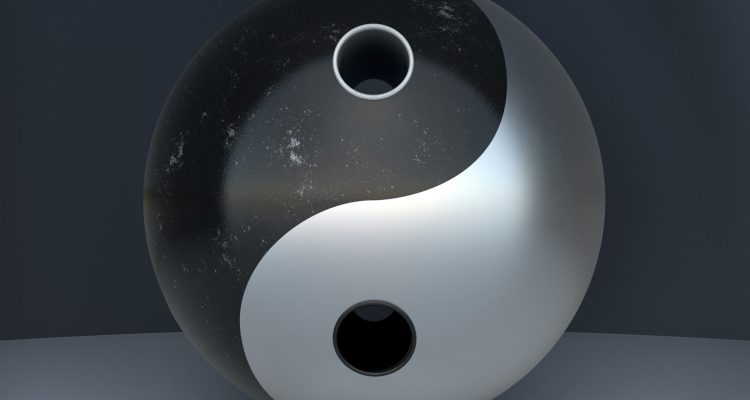
2: Yin and Yang. For something to become perceptible, a contrast is needed. We need hot and cold, above and below, full and empty. Yin and Yang are not two opposing forces: they are the two faces through which the Tao makes itself visible. It is the first division, and everything starts from there.
3: the Three Burners. Once there is an above and a below, there is necessarily a middle. The Upper Burner, the Middle Burner, the Lower Burner: this is the first structure, the first organisation of space within the body.
That is where we are. We have a whole, a polarity, a structure.
One thing is still missing. And it is movement.
Why 4 follows naturally from 3
The first three numbers describe a state. They draw an organisation, an architecture. But nothing moves yet.
Yet the first observation a human being makes when looking at the sky is that nothing stays still. The sun rises and descends. The days lengthen then shorten. The cold comes, then goes, then comes back.
Yin and Yang are not two frozen blocks coexisting peacefully. They continually transform into one another. Yang grows to a maximum, then decreases. Yin does the same, out of phase.
And when we describe this permanent tipping movement, we mechanically obtain four positions: Yang rising, Yang at the top, Yang descending, Yang at its lowest.
Four positions. Four seasons.
So 4 is not a new idea added to the previous ones. It is 2 set in motion and observed over time.
The 4 states of Yin and Yang
This is where Chinese medicine becomes precise. Each season does not simply correspond to "it is hot" or "it is cold". Each one corresponds to a particular combination of Yin and Yang.
Spring: the nascent Yang within Yin, Shao Yang (少陽)
We are coming out of winter, the most Yin period of the year. Cold still dominates, the night is still long. And yet, something has already started moving again.
Under the ground, the sap rises. The buds form even before opening. Yang is there, tiny, but active, and it is still surrounded by Yin.
This is what is called Shao Yang, the "small Yang" or the "nascent Yang". It is a fragile Yang, starting out, pushing forward.
Hence the nervousness, the irritability, sometimes the insomnia that many feel in spring: it is an energy that wants to come out and does not always find a way.
Summer: Yang within Yang, Tai Yang (太陽)
Yang has finished its rise. It is at its maximum. The heat is here, the days are long, everything is deployed, open, visible.
This is Tai Yang, the "great Yang". Nothing is held back. The sap is in the leaves, the blood is at the periphery, we sweat, we expose ourselves.
It is also the most dispersing moment of the year. A maximal Yang is magnificent, but it consumes.
Autumn: the nascent Yin within Yang, Shao Yin (少陰)
It is still hot. The days are still pleasant. But the movement has reversed.
Something is coming back down. The leaves turn yellow, the sap leaves the branches, the days imperceptibly shorten. Yin has appeared within Yang.
This is Shao Yin, the "small Yin". It is the beginning of retreat, the moment when we start to bring back in what had come out.
Hence that melancholy so characteristic of autumn, which Chinese medicine associates with the Lung: it is not a pathological sadness, it is the felt sense of a movement of withdrawal.
Winter: Yin within Yin, Tai Yin (太陰)
Yin is at its maximum. It is cold, the night is long, nature seems dead.
This is Tai Yin, the "great Yin". But beware: "maximum Yin" does not mean "absence of life". The seed under the ground is very much alive. It is simply in reserve.
Winter is not a dead time. It is a time of storage. What is saved in winter will be available in spring. What is squandered in winter will be missing all year.
| Season | State | Chinese name | What happens |
|---|---|---|---|
| Spring | Yang within Yin | Shao Yang 少陽 | The Yang appears and rises |
| Summer | Yang within Yang | Tai Yang 太陽 | The Yang peaks and unfolds |
| Autumn | Yin within Yang | Shao Yin 少陰 | The Yin appears and brings back down |
| Winter | Yin within Yin | Tai Yin 太陰 | The Yin peaks and stores away |
These four names are not decorative. We then find them again in the names of the meridians, in the six energetic levels, in all the theory that follows. Remembering them now is simplifying your life later.
A season is not a temperature, it is a movement
This is, in my opinion, the most important point of this article.
We are used to defining the seasons by the climate. Summer = hot. Winter = cold. It is true, but it is a consequence, not a definition.
In Chinese medicine, a season is first defined by a direction:
- Spring: it rises. Emergence, pushing, opening. Like a seed breaking through.
- Summer: it unfolds. Expansion, exteriorisation, maximum activity.
- Autumn: it comes back down. Retreat, tightening, sorting what we keep and what we let go.
- Winter: it concentrates. Preservation, internalisation, storing away.
Rise, expand, come back down, concentrate. These are the four movements that Chinese medicine observes, and the climate is only its most obvious manifestation.
This distinction changes everything. Because a movement starts before it is visible. And that is exactly what explains the offset between calendars.
The 4 seasons are not only in the year
Here is what makes this logic truly useful: the four movements do not only concern the calendar.
Rise, unfold, come back down, concentrate: as soon as time passes, these four phases are there. In a year, yes. But also in a day, in a project, in a life.
Your day contains the four seasons
This is the most immediate application, and the easiest to verify on yourself.
| Moment | Season | Movement | What suits it |
|---|---|---|---|
| Morning (6am–11am) | Spring | It rises | Start, initiate, decide |
| Midday (11am–3pm) | Summer | It unfolds | Meetings, contacts, visible action |
| Afternoon / evening (3pm–8pm) | Autumn | It comes back down | Sort, finish, close off, tidy up |
| Night (8pm–6am) | Winter | It concentrates | Withdraw, sleep, rebuild |
Test it over your week: how many times have you tried to start a difficult task at 5 pm? To settle a conflict at 10 pm? To do intense sport at 9:30 pm?
It is not laziness if it does not work. It means you are asking for a spring movement at an autumn moment.
A single adjustment to test this week: move the task that costs you the most to the 8am–10am slot. Not because you will be "more motivated", but because the movement of the day pushes in the same direction as you.
Your daily winter is the evening
The principle of winter is storing away. What is saved will be available.
Applied to the day, it gives a simple rule: what happens between 9pm and 11pm determines your morning.
A bright screen, a gripping series, a tense discussion at 10:30pm: these are spring and summer movements (it rises, it activates, it externalises) placed in a winter moment. The body cannot store away, and the next day there is nothing to spend.
It is not a question of how many hours of sleep. It is a question of the direction of the movement.
Your projects also have four seasons
Same logic, on a larger scale. Every project (professional, personal, creative) goes through the four movements:
- Spring: the idea emerges, still vague, fragile. We explore.
- Summer: we unfold, we show, we implement. Maximum energy spent.
- Autumn: we sort. What worked? What do we give up?
- Winter: we stop. We capitalise. We let it rest before relaunching.
Most difficulties come from refusing a season.
Wanting to be in summer all year long (producing, launching, showing without ever stopping) is the most common burnout pattern among the people I see at the practice. A permanently maximal Yang does not exist in nature. Nor does it exist in human beings.
And a refused autumn (that is, refusing to sort and let go of what no longer works) produces exactly what Chinese medicine describes: stagnation. We accumulate without ever letting go.
Three questions to ask yourself
Rather than a list of advice, three questions that use this grid directly:
1. What season am I in right now?
Not in the calendar. In your life. Are you in a starting, unfolding, sorting, or resting phase?
2. Am I forcing against the movement?
Are you trying to launch something while you need to close off? To rest while something asks to come out?
3. Which season do I systematically avoid?
This is often the most revealing. Many people never have a winter: never a real stop, never time without production. Others stay stuck in autumn, ruminating over a sorting they never do.
There is no good or bad season. There is only a right moment for each movement.
Why the Chinese spring starts in February
The Chinese calendar starts spring around February 5, while the Western calendar waits until March 20 or 21. Nearly six weeks apart.
The explanation fits in one sentence: the two calendars do not date the same thing.
The Western calendar dates the visible peak of the phenomenon. The March equinox is the moment when day and night balance out, when spring becomes obvious to everyone.
The Chinese calendar dates the start of the movement. On February 5 (Lichun, the "establishment of spring") the rise is already under way. Not in the air, but in the soil. Not in the leaves, but in the roots.
When you define a season by its movement rather than its temperature, you logically make it start earlier. It is coherent.
And the inter-season in all this?
You may have heard of a fifth season: the inter-season, or Earth season.
It does exist, and it is very important, but it belongs to another system, that of the Five Movements. It corresponds to the transition itself: the moment you leave one season without fully being in the next.
In other words: it does not belong to 4. It belongs to 5.
Conclusion: what if we moved on to 5?
Let us recap the road travelled in this series:
- 1: The Tao, the undifferentiated unity.
- 2: Yin and Yang, the first polarity.
- 3: The Three Burners, the first structure.
- 4: The seasons, movement in time.
At each step, the world becomes a little more readable. We now have a complete framework: a whole, a polarity, a structure, a cycle.
But something is still missing. Our four seasons work like a circle, and a circle has no centre. It lacks a point of support, a pivot to turn around.
That centre will be the fifth element. And with it, we will enter the system that most people know as the Five Movements: Wood, Fire, Earth, Metal, Water.
That will be the subject of the next article.
This article is part of a series dedicated to the logic of numbers in traditional Chinese medicine:
1. The Tao · 2. Yin and Yang · 3. The Three Burners · 4. The Four Seasons · 5. The Five Movements (coming soon)
Are you forcing against your season?
Exhaustion despite rest, projects that never come together, feeling like you are running on empty, sleep that no longer repairs. Often, it is not a lack of energy, it is energy pushing in the wrong direction.
I see clients in Courbevoie, a stone's throw from La Défense, for a personalised energy assessment.