
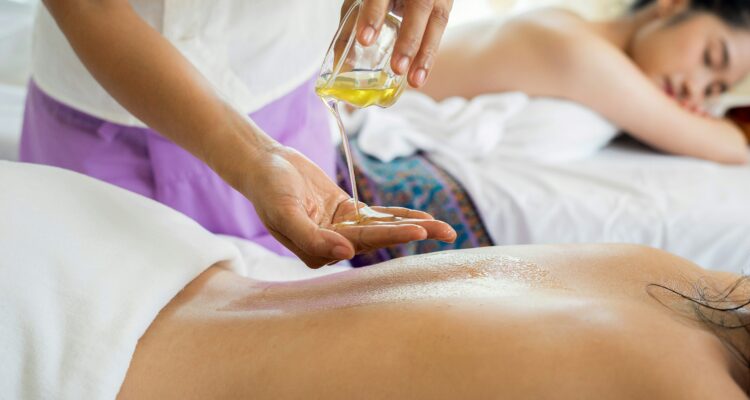
Swedish massage is an oil massage on a table, combining gentle and fluid movements to soothe the body and relax the muscles. Originating from Sweden, it combines kneading, vibration and gliding to stimulate blood circulation and reduce muscle tension. Ideal after a long working day or a sporting effort, it also promotes better flexibility and an overall feeling of wellbeing.
Today it is one of the most practised massages in the world, often considered the basis of many other Western massage techniques. Its popularity lies in its ability to adapt to very different needs: a simple moment of relaxation, preparation for a physical effort, or recovery after a period of stress or intense fatigue.
Why choose Swedish massage?
- Physical and mental relaxation: a deep relaxation, ideal for soothing muscle tension or releasing accumulated stress
- Optimised circulation: pressure and friction techniques stimulate blood and lymphatic circulation, for a better oxygenation of the muscles
- Release of tension: particularly suited to active people, to untangle the tensions of the back, shoulders and neck
- Improved flexibility: the kneading and gentle stretching manoeuvres help loosen the muscles and improve the range of movement
- A moment for yourself: beyond the physical benefits, this session is also a parenthesis of disconnection, far from the demands of everyday life
This massage suits a wide audience: sedentary people suffering from tension linked to office work, athletes in the recovery phase, or anyone simply looking to release the pressure accumulated during the week.
Prices and durations
| Duration | Price | Ideal for |
|---|---|---|
| 1h | 80€ | Priority areas defined together at the start of the session |
| 1h30 | 120€ | Ideal duration: whole body (back, legs, feet, stomach, face, neck) |
| 2h | 150€ | Slower pace, repeated gestures: deep relaxation or preparation before an intense physical effort |
The 1h30 duration remains the most requested, as it allows the whole body to be treated without rushing. For a first session, it is generally recommended in order to fully discover the benefits of this technique.
How a session works
On arrival, a chat allows me to understand your wishes, your specific needs and to identify any contraindications, in order to adapt the massage in a personalised way. This dialogue is essential: it guarantees a session respectful of your wellbeing and your health. Feel free to indicate a preferred essential oil or to choose the playlist that will accompany you.
The session begins lying on your stomach: precise and fluid movements are applied over the whole back, gradually releasing the accumulated tensions, then continue on the legs for a complete relief of the posterior area. A neutral oil (grape seed oil) is applied between each massaged area, allowing the hands to glide without catching the skin.
Once this first work is finished, you turn onto your back to extend the treatment: gentle pressures are applied to the feet, stomach, arms, legs, head and neck, in order to release the last tensions and prolong the state of relaxation.
The session ends with a gentle awakening time, accompanied by a warm drink, to allow you to progressively resume the course of your day.
Contraindications
Swedish massage is not recommended in the following situations:
- Serious illnesses (cancer)
- Bone diseases
- Circulatory disorders (phlebitis)
- Varicose veins
- Heart disorders
- Inflammatory skin diseases
- Pregnancy
Feel free to ask your doctor for advice if in doubt. A chat at the start of the session always allows me to check the absence of contraindication before starting the massage.
History of Swedish massage
Swedish massage was developed in the 19th century by the physiotherapist Per Henrik Ling. A child with fragile health but passionate about gymnastics and martial arts, he began very early to test various techniques to improve his physical condition.
In 1799, he enrolled at the University of Uppsala to study medicine and philosophy. Particularly interested in anatomy and physiology, he developed a therapeutic gymnastics based on the natural movements of the body, which he then combined with massage techniques to create a holistic approach to health and wellbeing.
In 1813, Ling was appointed director of the Royal Gymnastics Institute, where he taught his programme of massage and gymnastics until his death. Over the years, his method was enriched with stretching and joint manipulations aimed at improving flexibility and mobility. His collaboration with many doctors and physiotherapists progressively allowed this protocol to be integrated into the medical care of the time.
It is thus that Ling's method became known, over time, under the name of "Swedish massage", still a reference today in the world of wellness massage.
Frequently asked questions
Is Swedish massage painful?
No. Unlike deep tissue massage, Swedish massage is gentle and fluid. It is designed for relaxation, not for working in depth on chronic pain.
Do I need to undress completely?
You are settled on the table in the best possible comfort and modesty, with a towel permanently covering the un-massaged areas.
What is the difference with deep tissue massage?
Swedish massage is a relaxation massage with gentle movements, while deep tissue targets muscle and fascia tension in depth, with a more intense pressure.
How long does a session last?
Three formats are offered: 1h (€80), 1h30 (€120, the most requested for a full massage), and 2h (€150).
Can I choose the essential oil and the music?
Yes, these preferences are asked at the beginning of the session to personalise your moment.
Are there any contraindications?
Yes, particularly in cases of circulatory or heart disorders, pregnancy or inflammatory skin diseases. A chat at the start of the session allows me to check the absence of contraindication.
Can I offer it as a gift?
Yes, feel free to contact me to arrange a personalised gift voucher.