
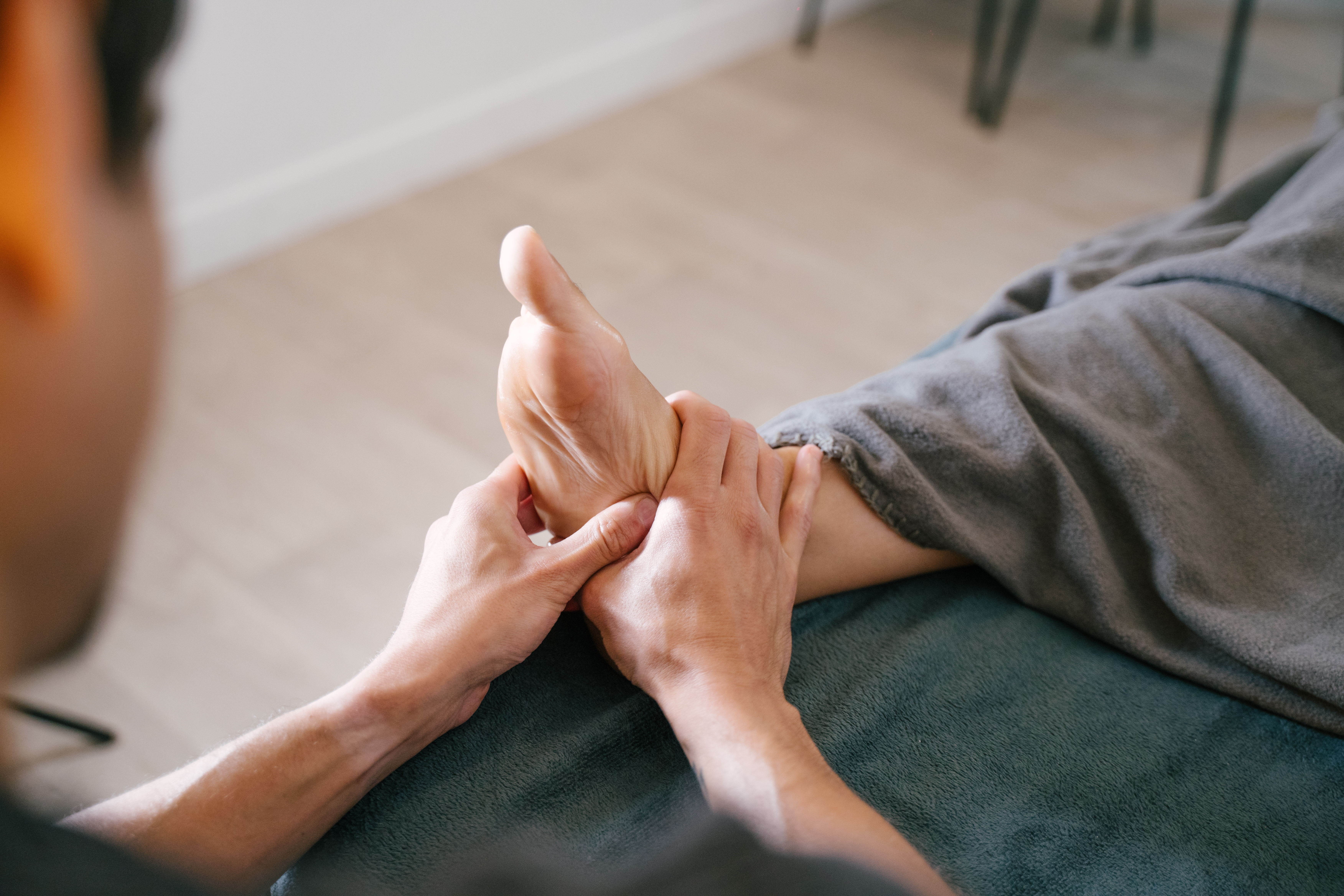
Balinese massage originated in Indonesia, on the island of Bali, where it was born from the encounter between Indian Ayurvedic medicine and traditional Chinese medicine.
It is a complete and enveloping massage, with oil, on a table, alternating deep pressures of the palms and forearms, kneading, gentle stretching and lighter gliding strokes. Its originality lies precisely in this balance between gentleness and tonicity: the skin is not merely stroked, but neither is the intensity of deep tissue sought. It is particularly suited to people who build up muscle tension linked to sport or daily stress.
Why choose Balinese massage?
Balinese massage can bring you:
- Release of muscle tension, especially in the upper and lower back, shoulders and neck
- Soothing of stress accumulated on a daily basis
- Stimulation of blood and energy circulation
- A more toned and supple body, thanks to the integrated stretching
- Skin deeply nourished by the oils used
- A lasting mental relaxation, often felt as early as the end of the session
I particularly recommend it to:
- People subject to significant daily stress
- Athletes and very physically active people
- Sedentary workers with back and neck tension
- People who hesitate between a relaxing massage and a more pronounced one: Balinese is exactly in between
- Anyone wanting a full-body massage
Prices and durations
| Duration | Price | Ideal for |
|---|---|---|
| 1h | 80€ | Discovery of Balinese massage, work on the upper body or priority areas |
| 1h30 | 115€ | Recommended format: full-body massage with stretching and relaxation time |
Balinese massage is particularly well suited to the 1h30 format: the pace can remain slow, the tension areas can be worked without rushing, and the stretching fully integrated into the session.
How a session works
On arrival, a chat allows us to understand your expectations, identify your tension areas and rule out any contraindication. You can also choose your oil and the music that will accompany you.
The session then takes place in two parts.
First part: the relaxation. I begin with a series of slow, enveloping movements that invite release. I massage, I knead, then I gradually increase the pressure with the fingers, palms and forearms on precise areas, working on the tension points. No part of the body is neglected: back, legs, arms, neck, stomach. Stress often settles in the upper and lower back, in the form of muscle knots: this is generally where the work is most expected.
Second part: the revitalisation. I then incorporate gentle stretching, which relaxes while stimulating the blood and energy circulation of the body. These mobilisations give Balinese massage its signature: you leave relaxed, but not "softened".
The session ends with a time to return to calm, accompanied by a warm drink, to let the body settle quietly into this new sensation.
Urut Pijat, the technique I practise
Balinese massage has many variants, the Indonesian archipelago counting a great diversity of populations and cultures. Among them, Urut Pijat is one of the most complete and widespread forms.
It is the one I mainly draw inspiration from, because it offers that right balance between gentleness and tonicity that the body needs to recharge. It combines manual pressures, kneading, gliding and stretching, in a fluid sequence covering the whole body.
As always in my practice, I adapt the intensity to how you feel: never hesitate to tell me if you want more or less pressure.
Contraindications
Your safety is my priority. Balinese massage is not recommended in the following cases:
- Fever or acute infection
- Serious illnesses (cancer)
- Circulatory disorders (phlebitis), significant varicose veins
- Unstable heart conditions
- Inflammatory skin diseases, wounds or burns
- Recent fracture, recent surgery
- Pregnancy
A chat at the start of the session systematically allows me to check that the massage suits you. Feel free to tell me about any medical history: confidentiality is of course guaranteed. When in doubt, ask your doctor for advice.
The origins of Balinese massage
Balinese massage is the fruit of the encounter between two great Asian traditions.
Ayurvedic medicine. Originating from Indian culture, it has existed for over 5 000 years and focuses on the metabolism and temperament of each person. Balinese massage borrows its manual techniques from it, but also a philosophy: helping the body and the mind find a balance to live in harmony.
Traditional Chinese medicine. It is based on the circulation of energies in the body. Balinese massage takes up the idea of working on precise points and pathways to restart circulation and release blockages.
In Bali, these influences were blended with local practices, the use of vegetable oils and plants, and the island's Hindu spirituality. Massage there long remained a family affair, passed down from generation to generation, before spreading across the world from the 1980s onwards with the rise of Balinese spas.
Whatever the variant practised, this approach remains centred on one goal: releasing the tensions of the body to soothe the mind.
Frequently asked questions
Is Balinese massage strong or gentle?
Both. That is precisely its particularity: it alternates deep pressures and enveloping movements. The intensity is always adapted to how you feel.
What is the difference with Swedish massage?
Swedish massage is essentially focused on relaxation, with gliding movements. Balinese massage is more pronounced and incorporates stretching, for an effect that is both relaxing and tonifying.
What is the difference with deep tissue massage?
Deep tissue targets specific areas in depth with intense pressure. Balinese massage remains a more enveloping full-body massage, with sustained but less targeted pressures.
Do I need to undress?
The massage is performed with oil on a massage table. You are settled in the best possible comfort and modesty, with a towel permanently covering the un-massaged areas.
Which duration should I choose?
1h30 (€115) is the recommended format for a full-body massage. The 1h session (€80) allows you to discover the technique or focus on priority areas.
Can I choose the oil and the music?
Yes, these preferences are asked at the beginning of the session.
Can I offer it as a gift?
Yes, contact me to arrange a personalised gift voucher.